
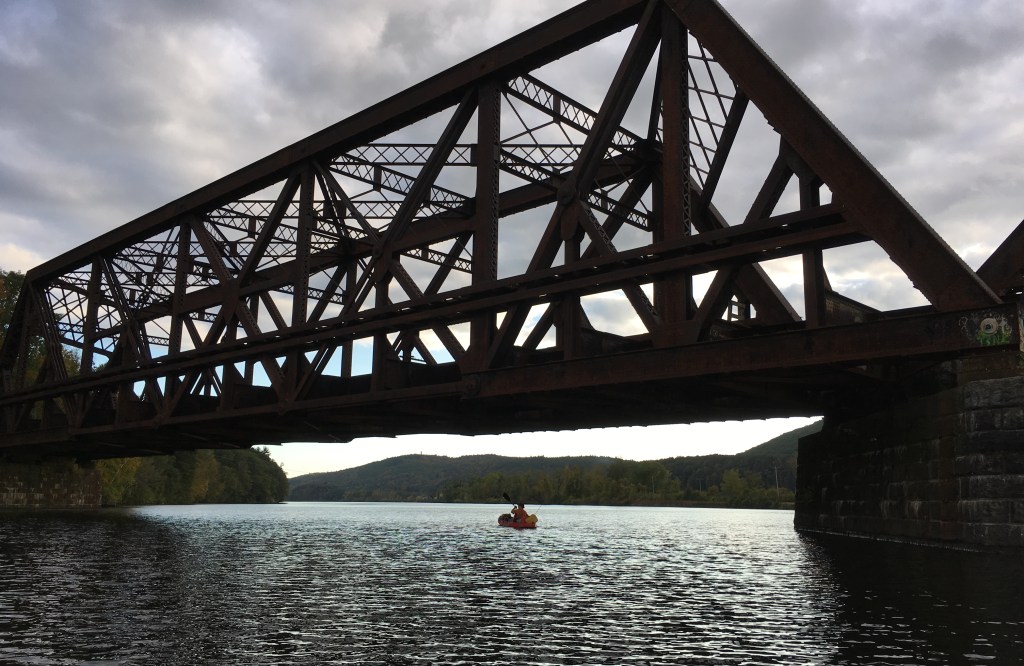
Trip Overview: Bellows Falls to Northfield, October 13-15, 2017, three days spent on the water, 37 miles paddled, one portage at Vernon Dam.
Jim and I met on Friday morning in Vermont at the Putney Inn. We were setting out to kayak Vermont’s southernmost reach of the Connecticut river. The kayaking and camping plans looked pretty routine, but the unexpected would turn this trip into a bit of an adventure.
I arrived at the inn the evening before. While checking-in I asked the host where I might find some food. He recommended the Putney Food Co-op, and I got there just minutes before closing. The place was such a great find that I will describe that in more detail below.
Back to the inn, the rest of the evening was spent arranging gear. Even so, I still wasn’t totally ready when Jim arrived the next morning. That worked out fine as he had a work call to deal with, giving me time to finish packing up.
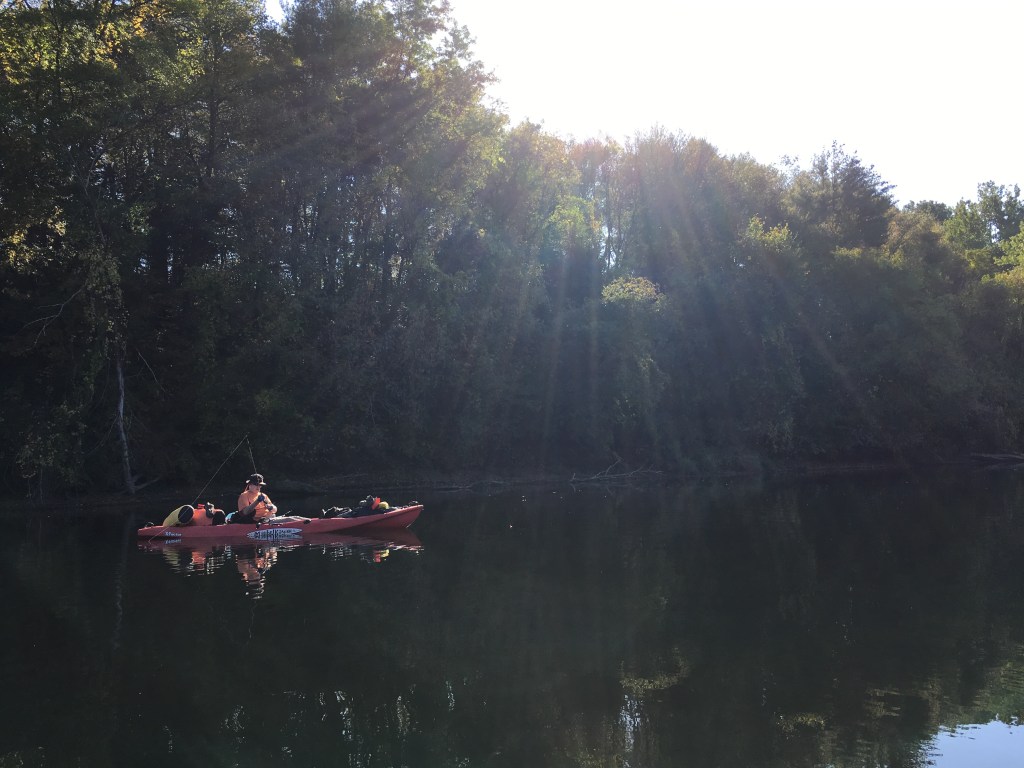

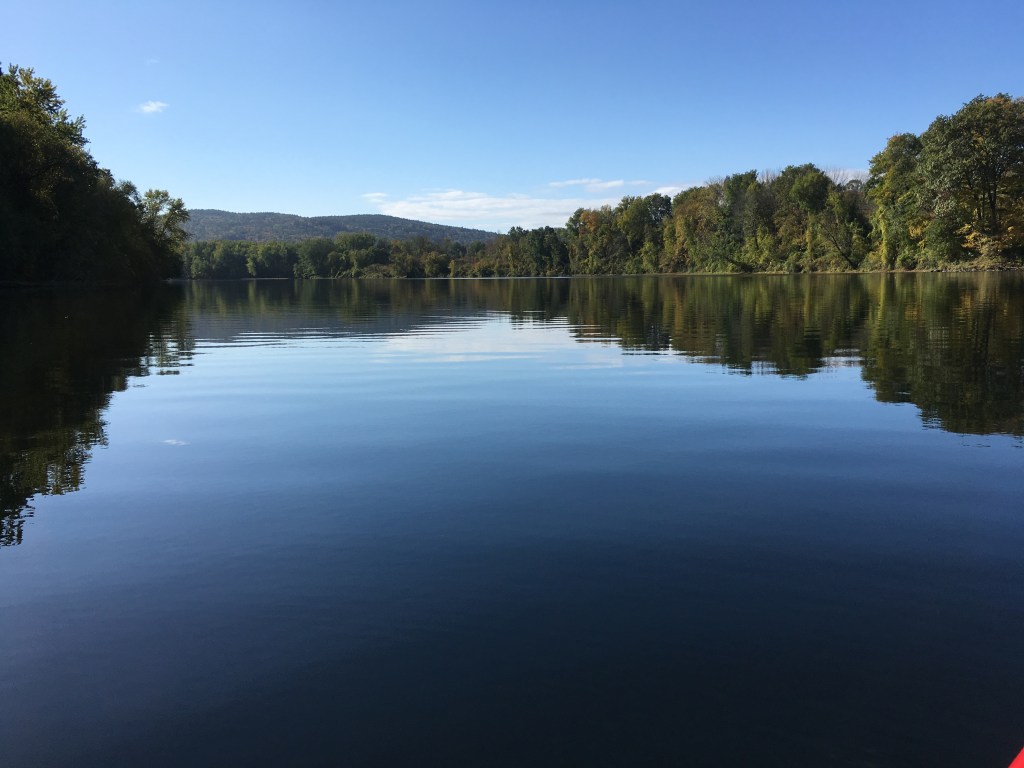
Leaving the inn behind, stopping at the food co-op for coffee and lunch for the ride, we set out to stage the cars. There were 37 miles between the put-in and pull-out sites, so staging took an hour and twenty minutes. We finally got out on the river at about 1:30. We had originally hoped to be on the river by noon, and to make camp by four. With nine miles to paddle to the campsite, this late start had us expecting to arrive by 5:30. With the sun setting at 6:07 there wouldn’t be much spare time, as naturally we wanted to set up camp during daylight. We were putting-in several hundred yards below the Bellows Falls Dam, and just as we finished prepping our kayaks at the river’s edge, a sense of urgency ignited.
Blaring out from the dam, an Orwellian alarm began to sound. Its was accompanied by a recorded announcement with police-state severity: “Step away from the river, a dam release is imminent, water level will rise quickly… Step away from the river…” I looked upriver at the dam, looked down at the height of the bank we stood on, then looked at Jim who said, “Let’s go!” So we did. Within moments of being on the river I recalled with apprehension what happened the last time I followed Jim after such a carefully thought out decision: He got rolled in class III rapids, and in my hurried attempt to reach his aid I went for a bit of a swim myself. The alarm upriver was soon enough silent, still, I kept looking back over my shoulder to see what sort of wave might be approaching. Fortunately, this time, my welfare was not in solely the hands of my brother, nor was it in the hands of a police-state. Rather, the states of Vermont and New Hampshire had arranged for little more than an increase in current to catch up to us at a thousand feet from the base of the dam. The trip begun—it wasn’t long before the concern of failing light displaced all other cares. In doing so, this concern ironically created a state of pure leisure. We got to the campsite with just enough time to set up during sunset.
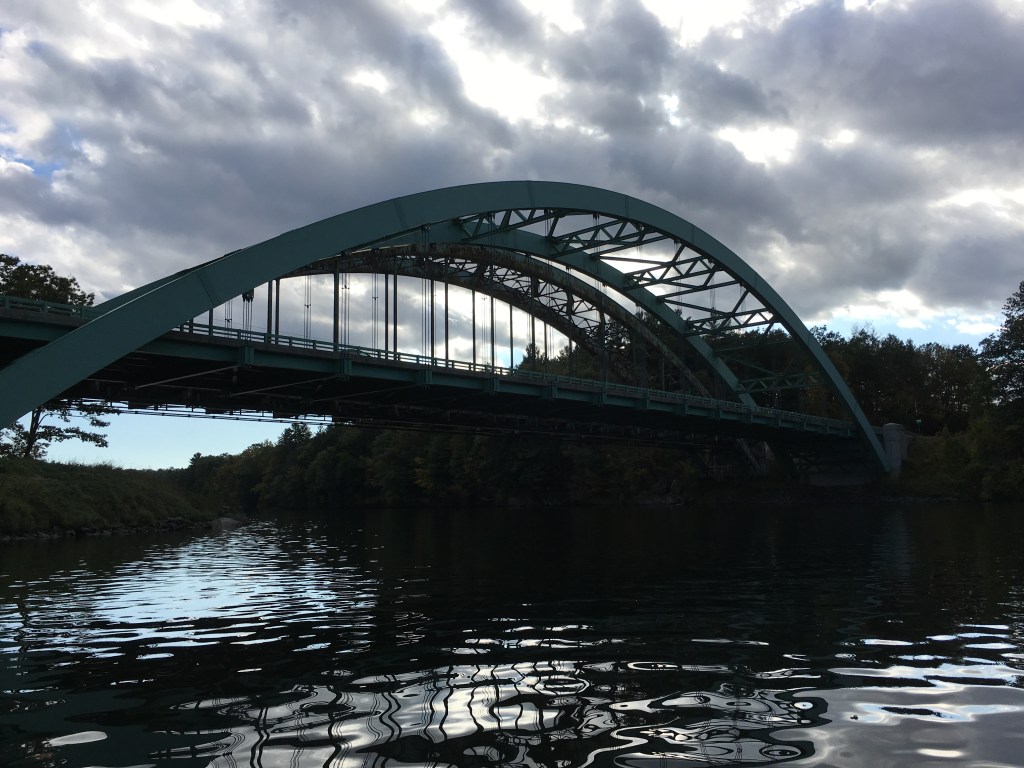
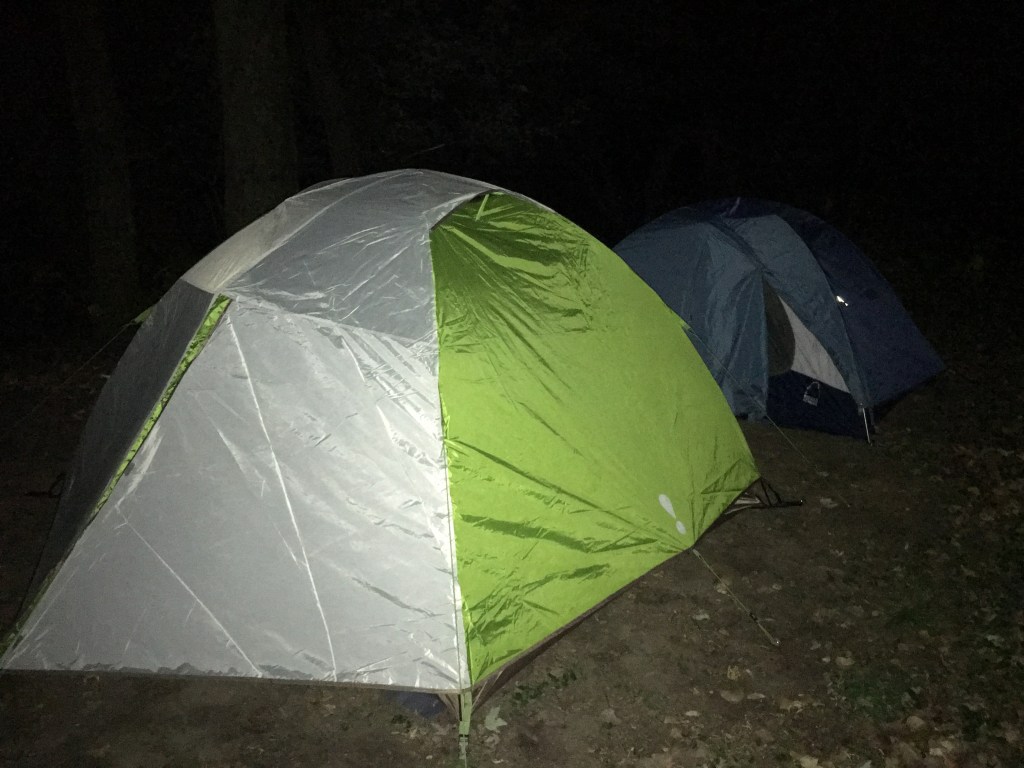
When camp was more or less set up, we had just enough twilight to wolf down diner, then to kayak back up river to hang our food bags from a tree. When we were back at the tents, we noticed a dirt road bordering the field next to us, so we figured it as our emergency exit for the night. Enjoying the quiet of the river in the dark, we sat out and talked for a little while. Soon we went to bed, even though it was still pretty early. Our sleep is usually broken a bit while camping. Sounds of night critters and cracking branches always evoke images of bears. Having stored our food up river, and sleeping in clothes that were not worn while cooking, nor while eating, are more than camping safety protocols to me—with the threat of bears sniffing around it is the only way I have any chance of getting decent sleep.
And so we slept, totally unaware that New Hampshire’s pheasant-hunting season was starting the next morning. Shortly after dawn, in the field next to our tents, we were woken by the sound of shotgun blasts. “Jim did you hear that?” Humorless, he replied, “Yep.” I listened to him zip out of his tent, and I heard him say, “Morning,” to which I heard a hunter reply, “Morning.” I emerged from my tent to see four hunters in the field adjacent to our camp. They were wearing orange vests, standing in a line, slowly sweeping the field for pheasant, and they had just realized they had us for company out here. A comical way to wake up, with more fun still in store. The hunters were moving along the river, and so we were pretty much stuck in camp until they were done. We went about breaking down camp and I thought to make some coffee. A complication was that the water was in the kayak down at the river’s edge. The last time I had seen the hunters they were a good way up the river. And as the river had a high bank, it seemed safe enough to go down and get some water. I started heading toward the kayaks and in his grogginess Jim muttered to me, “The hunters are coming back up the river.” I presumed them to be roughly where I saw them last, but now turned back facing us. But in fact, Jim was referring to two newly arrived hunters, and, I failed to become informed that they were not upriver where I saw the others. These hunters were adjacent to our camp, walking parallel to me, also going straight to the river.
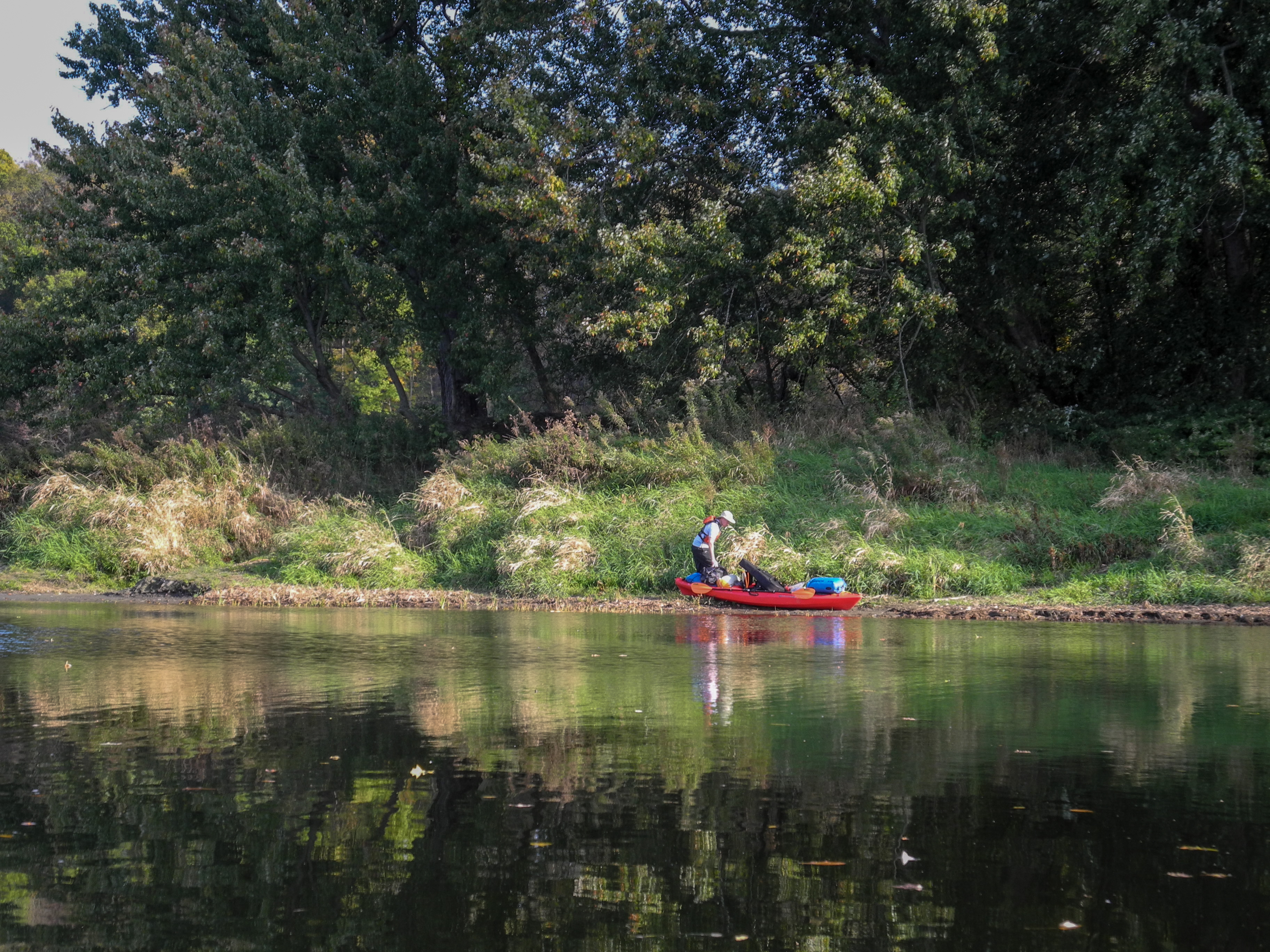
Now I was at the river’s edge standing at my boat, facing the river. The following took place in less than two seconds, my best guess—1.4 seconds. To my right I hear a startled sound, a heavy bird’s rapid wing-burst to flight. Alarmed, I turn quickly to see it in the air while still just several feet from its roost among the grasses up on the bank. It was about thirty feet from me and its flightpath would have it pass several feet to my left, a dozen feet above the water. Eyes flexed wide, I see exactly what the next events are: First— my sight turns from the bird, fixes on the bank to my right, and my body springing toward it. Next— I am halfway to the bank, the hunter’s warning call: “BIRD.” Finally—as I snuggle into the bank, the shotgun blast. Silence. As far as I can tell, no one is hurt.
I recall as children, Jim, myself, and some friends pondered the second use of the name of another bird, “duck.” We thought it was ridiculous that the name of this bird was also used for the apparently unrelated action, “duck.” We would take turns pointing at imaginary ducks flying by calling out “duck!” We would all dive for cover while laughing at the absurdity of being filled with terror over a flying duck. “DUCK.” Now I know.
Coming up from the bank, notably composed, and holding above my head the orange PFD vest I had been wearing, I repeat, “I am coming up from the bank, I am coming up from the bank, …” Back up at camp, shortly after I had started the coffee, the two new hunters came back up along the edge of camp and greeted us. They asked, “Were one of you down at the bank?” “I was,” I replied. They were very nice, and told us that the previous hunters had let them know that Jim and I were here. They assured us as they knew we were here, they were being careful. We talked about the hunting season and regulations, and they showed us one of the pheasants they got. It was a beautiful bird, and I said so. The hunter agreed, but, somewhat apologetically explained that it could have looked better. This one was rather wet. Their dog had to retrieve it from the river. Humorless I thought, “Yep.” The hunters left, and we broke camp to head out on the river for an eighteen-mile day.
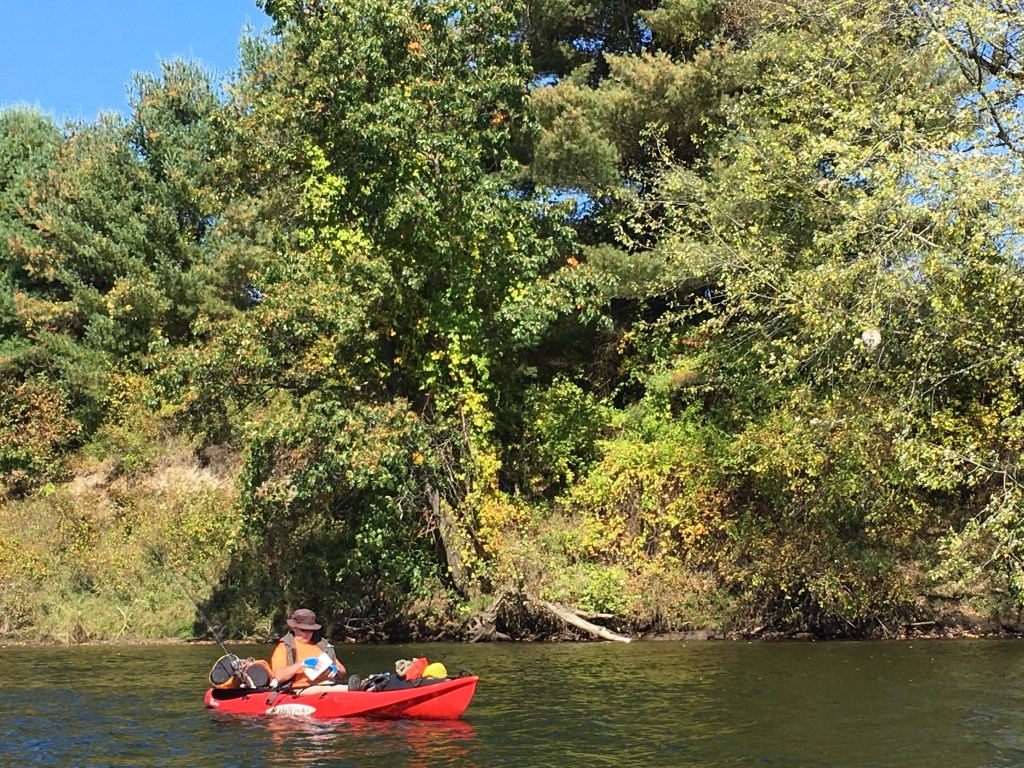
Once again, we started on the river later than we had hoped, a bit after 10:00, leaving us just over seven hours to get there by 5:30. This meant we would have only about an hour of break time for the day. The day went well. We talked about some new things, and repeated some things we’ve discussed before. The river largely all to ourselves. Every hour or so, a small river-speedboat would pass by. These flat-bottom boats would zip by with little wake; maybe one wave, hardly a foot high. They came up and went by like a breeze. We also saw a man sculling by, headed upriver. As he passed again on his way back, he was now facing us, so I called over—”Nice boat.” He stopped and we all chatted for a while. He sat on a twenty-seven-foot long wooden needle, balancing by resting the oars on the river’s surface. It turns out that I was correct; nice boat. It was built by Graeme King, who coincidentally has a residence in Putney, same town as the food co-op.
While moving along and checking our location with the map, we were constantly aware of not having much spare time. This might have become stressful, but it actually turned out to be liberating. There were not many options left to us, and our decisions were rendered rather binary. Choices were made based on whether we expected them to speed our arrival to camp, or delay it. Do you want to stop paddling? Nope. Do you want to break for food? Yes. Do you want to break longer than it takes to eat it? No. Just a few minutes to do a little fishing, maybe play a little guitar, maybe stop and see what’s over there? Nope. But I would like to make camp during daylight, and also, I would like to make camp during daylight. Our pasts and futures were of little concern—pure leisure.
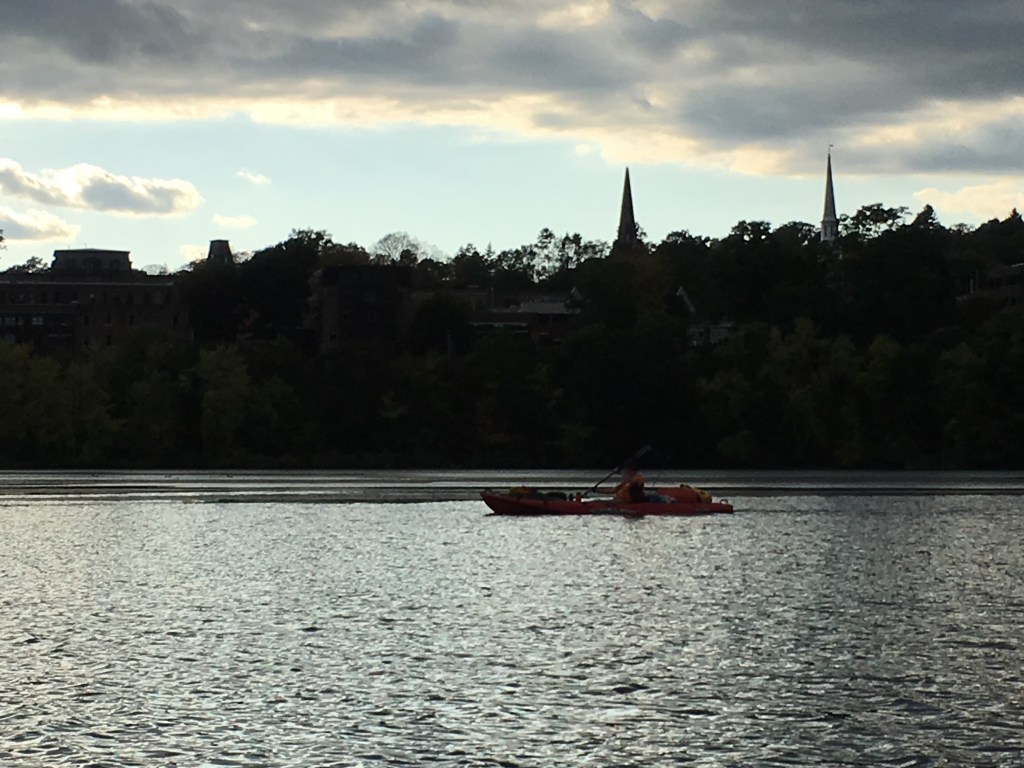
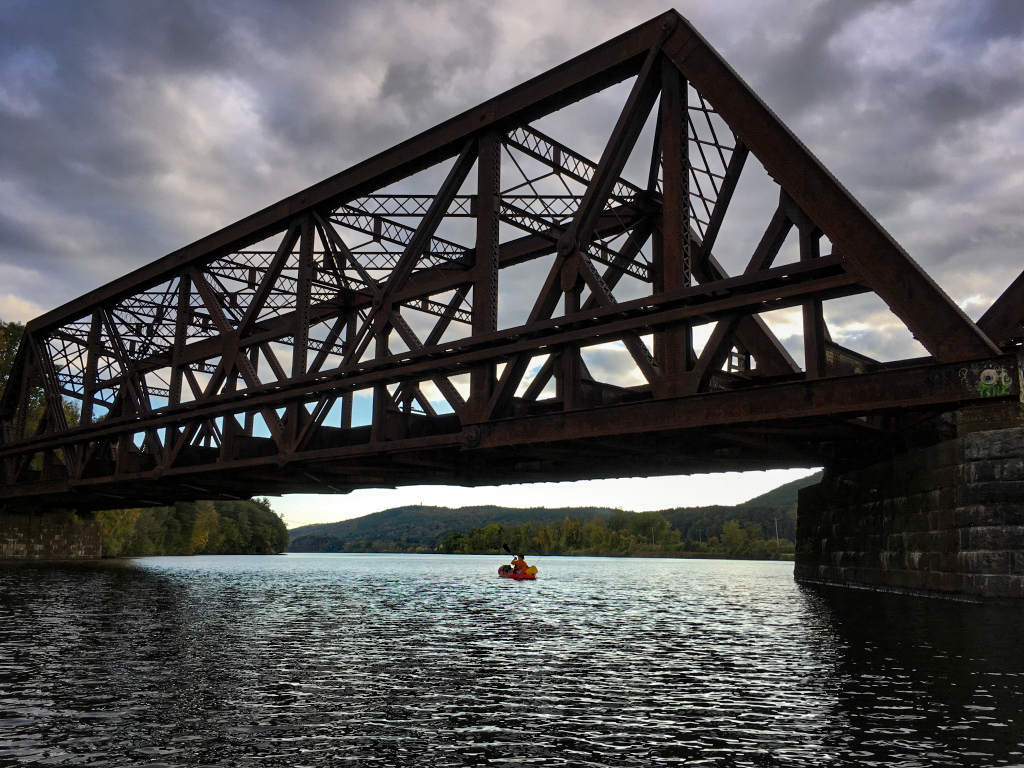
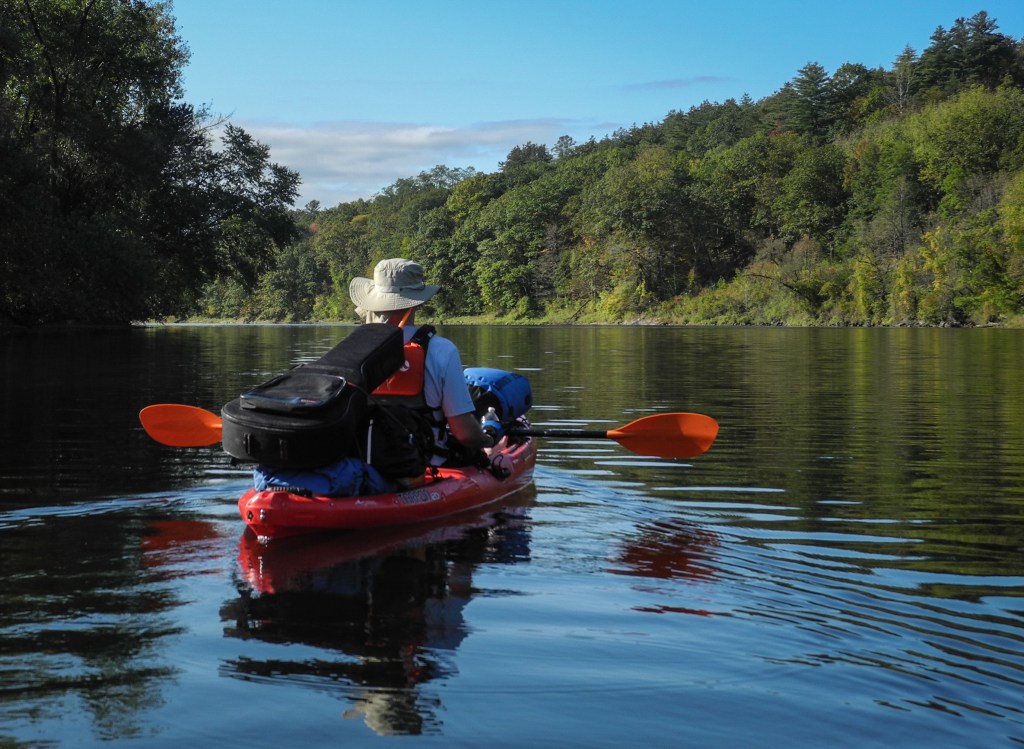
Clouds came over the river in the afternoon which darkened the sky early, as did the hills of Vermont to our west, with the sun being low. We enjoyed the challenge of the day guided by our goal, make camp before dark. And we did, but just barely, as you can see by the photo above. It shows Jim passing by Brattleboro, with a mile still to go. But when we found the site, the hills had dropped off, the clouds broke, and we had a comfortable time setting up camp.
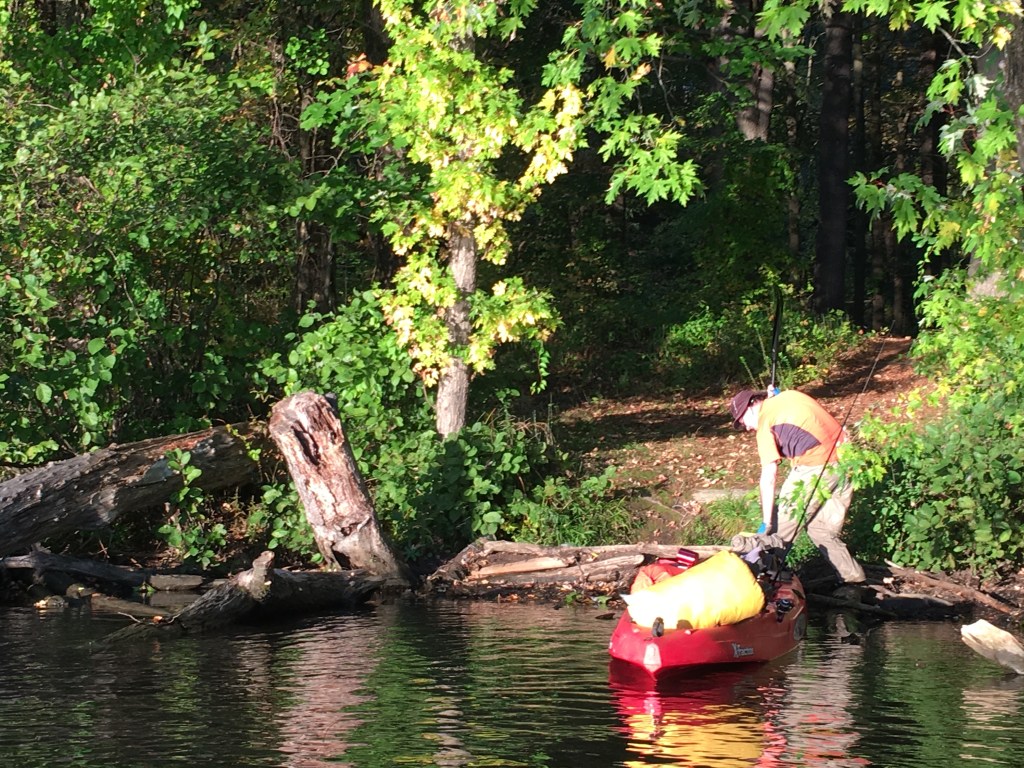
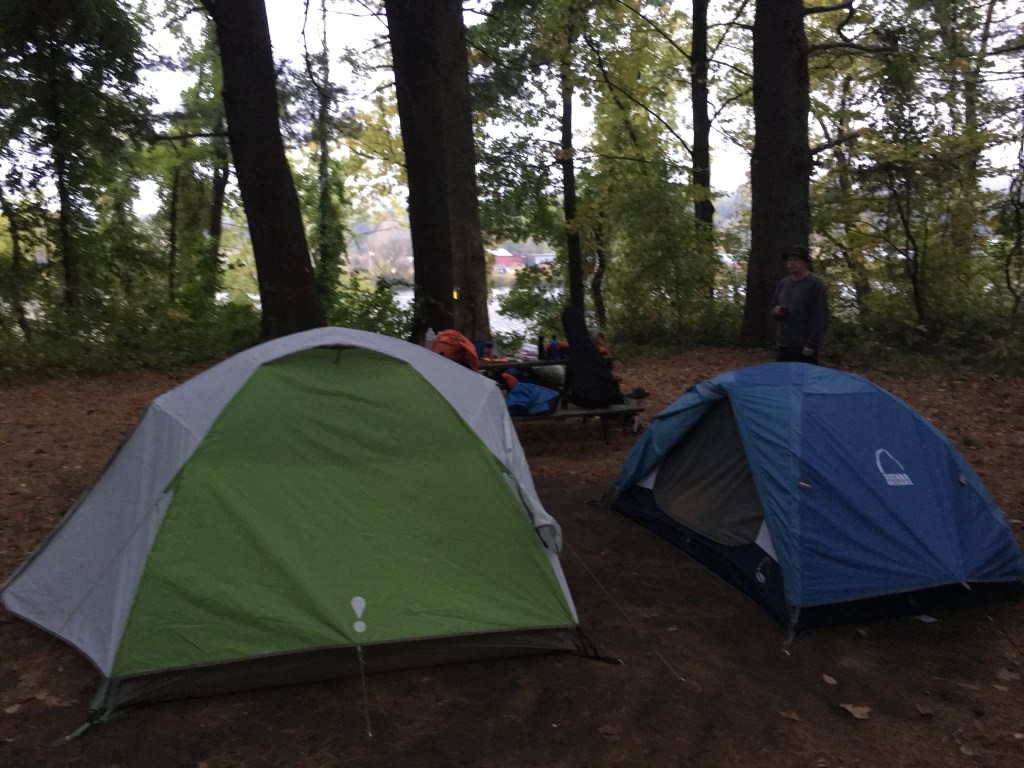
The next morning, now practiced at breaking camp, we were out on the river shortly after 9:00, and so figured we had a wealth of time. The car was only 10 miles downriver, just over the border into Massachusetts. There would be one portage during this reach. Figuring an hour for that, an hour for breaks, and an average of 3 miles per hour, we expected to get to the car at about 2:30. That would be perfect. We figured wrong.
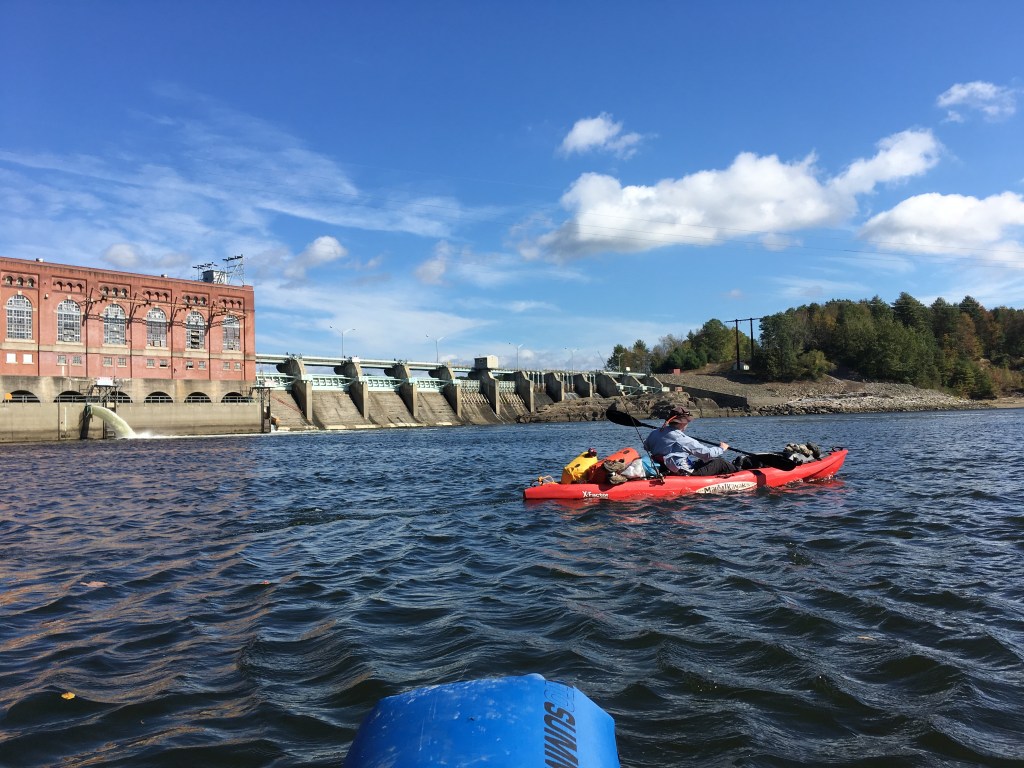
The weather forecast was for light winds, 6 mph. It was wrong. By the time we made it around the first bend the wind was up to about 15 mph. If we stopped paddling, we were actually blown upstream. Still, we made it to the Vernon Dam in reasonable time, just half an hour or so behind schedule. This was our first major portage experience, and so, our expectations for it were wrong. We knew we would have to lug the gear 1/4 mile, but had not fully understood the implications of this. A dozen shuttles of gear would add up to 6 miles of walking while carrying it. We should not have brought non-essentials on this trip, our packing was wrong.
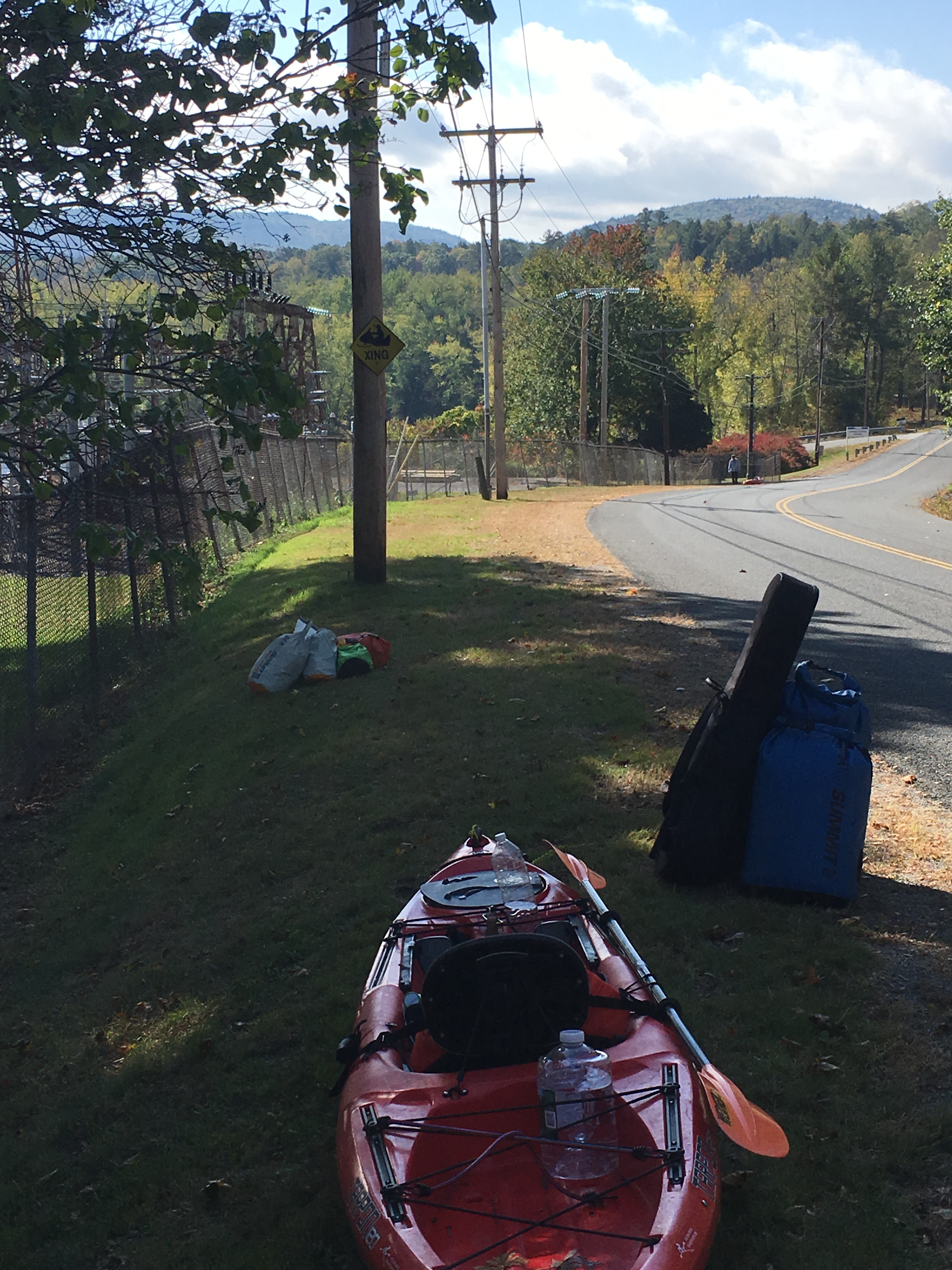
The portage took only about 30 minutes longer than planned for, but it was about twice as tiring. Still, as an accomplishment, it was rewarding. We paddled away from the dam looking for a nice spot to take a break.
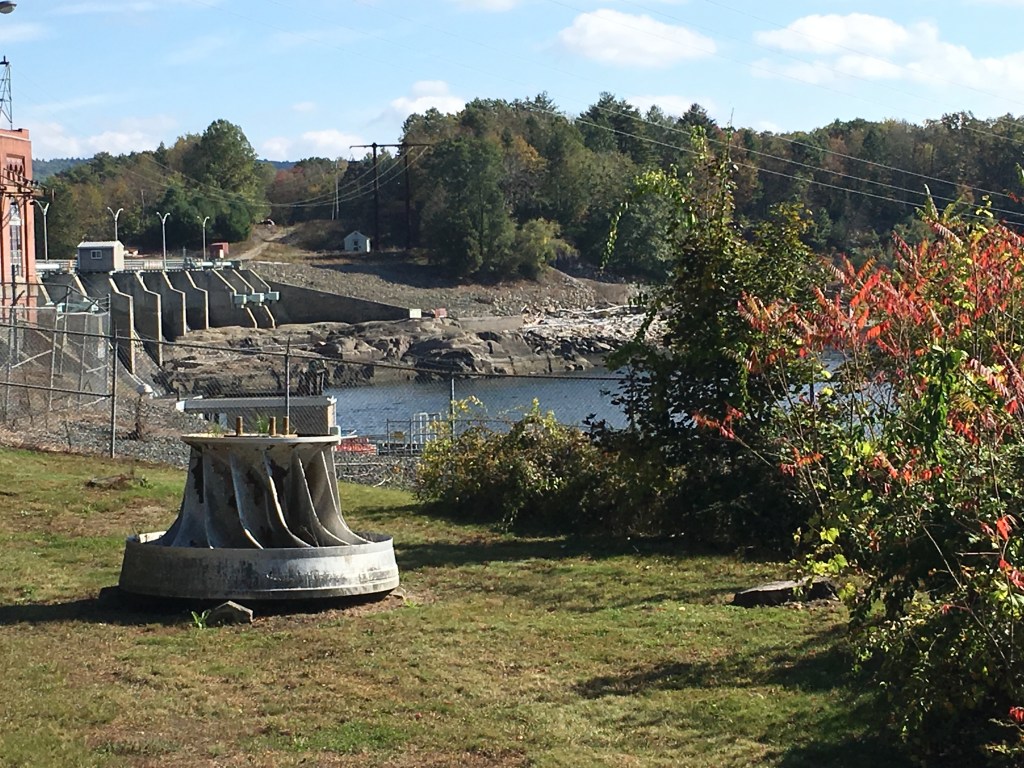
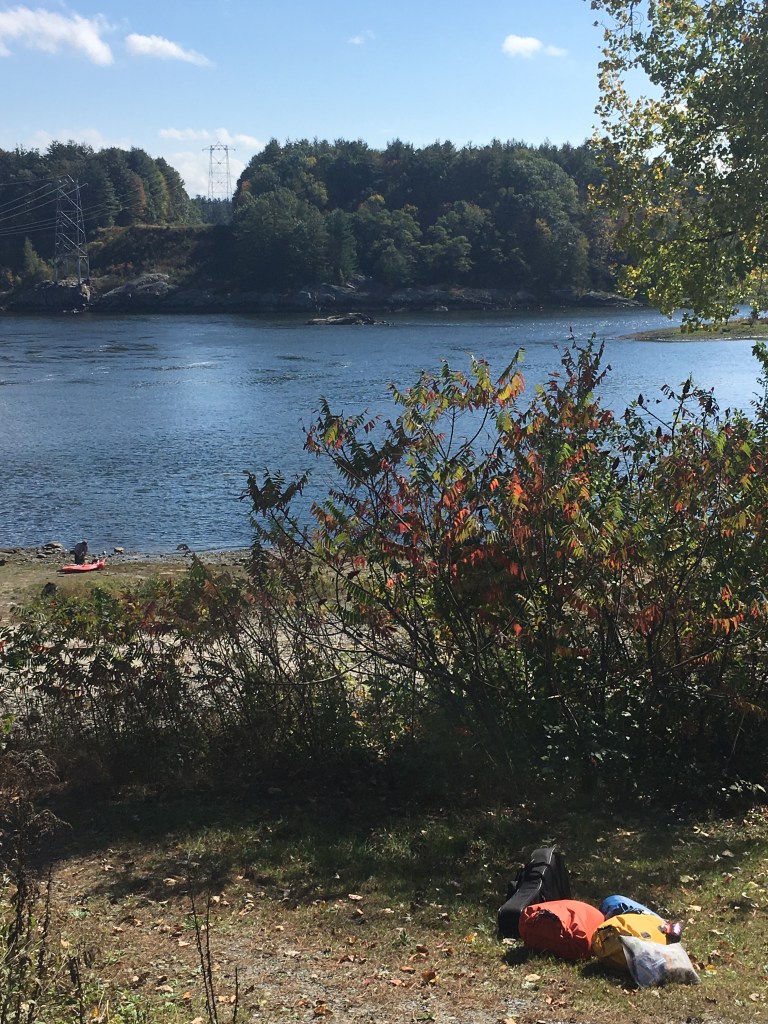
A great spot was waiting just around the first bend. We came up to an island flanked by shallow water. Sunlight was shining into the clear water just several inches deep, over a bed of cobble stones and muscle shoals. It was gorgeous, a highlight of the trip. We found a nice stone beach to our right, on the left side of the island. But tired and behind schedule, we did not concern ourselves with photos. For lunch, we poured some powdered coffee into cold water, gulped it down with dried fruit, nuts, a protein bar; and then got back in the boats. Paddling again into the strong wind, within minutes our refreshment was blown away.
The wind was still blowing straight up-river, and had picked up to perhaps 20 miles per hour. On the long and wide stretches of river, we encountered what looked like class 2 rapids, which would have sped us along. But they were actually mini-seas of waves, one to two feet high, being blown up river, and even breaking at us. Having already paddled for two and a half days, we were about to become quite exhausted. After another hour or two into this wind, I became concerned about our strength reserves to finish. This section of the river had some unusually long stretches of beach, and so we experimented with walking along the beaches while roping our kayaks along. It didn’t seem to save or lose much time, but it was a great relief from paddling into this wind. We also experimented with paddling on both sides of the river to see if one side had more cover from the wind.
During these final crossings of the river, just a mile or so from the car, we were exhausted. But the elements: Distance, time, wind, and naivety—they were as fresh as ever. Relentless. Trying to get to over to the Vermont side quickly, we cut across the river at a steep angle. With the wind howling up the river we could barely hear each other shout, though we were only about thirty feet apart. Jim was ahead of me, and I stopped paddling for a moment to get a drink of water. Water bottle in hand, I felt my kayak start to roll. In the moment it seemed to be rolling for absolutely no reason at all. With nothing apparent to react to I was aghast and helpless. The next moment had me looking up through water, in wonder. I was rising, filled with a sensation of being drawn up. I had my PFD vest on. Be prepared. My head popped up, I grabbed onto the bottom of my overturned kayak, kicked a couple of times, righted the kayak, kicked up, floundered across it, and shouted, “Jim!!!” He turned his head and started paddling over. I started kicking toward my floating paddle and gear heading downstream, Jim went for the other gear being blown upstream. All of the gear bungeed to my kayak had stayed on. This was remarkable as I had piled the gear pretty high on the back of the kayak. I won’t do that again. It was more or less piled in the shape of a sail, the reason the wind rolled me. My paddle was floating, my binoculars were floating on the buoy I had them strapped to. My water bottle’s plastic cap was floating, but the bottle itself sank. Though I was a bit cold for the rest of the paddle, this near disaster could hardly have gone better.
Not long after this we were at the pull out, loading the gear onto the car. We then drove back up to the northern car, repacked both cars, and were now ready to head home. On saying goodbye, we shook hands looking into each other’s eyes with exhilaration and agreed; “Good trip!” “Yeah, good trip!” The exhilaration lasted the drive home, through unloading the car, and finally making it to bed at about midnight. It was a good trip!
The Putney Food Coop:
Anyone planning to drive past exit 4 on I-91 should consider a stop here, it’s just off of the interstate. The co-op building stands alone on several acres, and is love at first sight. Even the approach to the building was full of charm. It appeared that the old wooden building once had a wrap-around porch, with the right half of it converted to interior space. The walkway from the parking lot met the open porch on the left half, which in turn led to the entrance. The entrance itself is an enclosed porch and is overhung by a large dormer. Both the building and grounds make a beautiful site for the community run, organic, health-food store. As I walked up, a man in his twenties greeted me warmly. He was straightening up the deck, getting ready to close. He broke from his work to show me in, and was just about skipping as he opened the door and presented the shop. Clearly, he loved this place!
Just inside, a young woman was working at a register. On seeing her colleague’s exuberance, she smiled fondly at him, and greeted me sincerely as well. I saw the prepared food counter just ahead and asked if any hot food was still available. They introduced me to the manager who would know. He proceeded to take me around the store and show me all of the prepared food options. During the presentation I wondered out loud if my room at the Putney Inn might have a microwave, as then I might consider a frozen option. My original host heard my pondering and proceeded to call the inn straightaway to find out. He soon reported that the inn had a microwave in each room. With the variety and quality of the goods, and such warm hospitality, this place couldn’t be any better. It has been open since 1941 as an integral part of the community. I imagine my experience visiting would have been much the same had I stopped by in 1970, “Peace, love, and music.”
 paddlersslipstream