
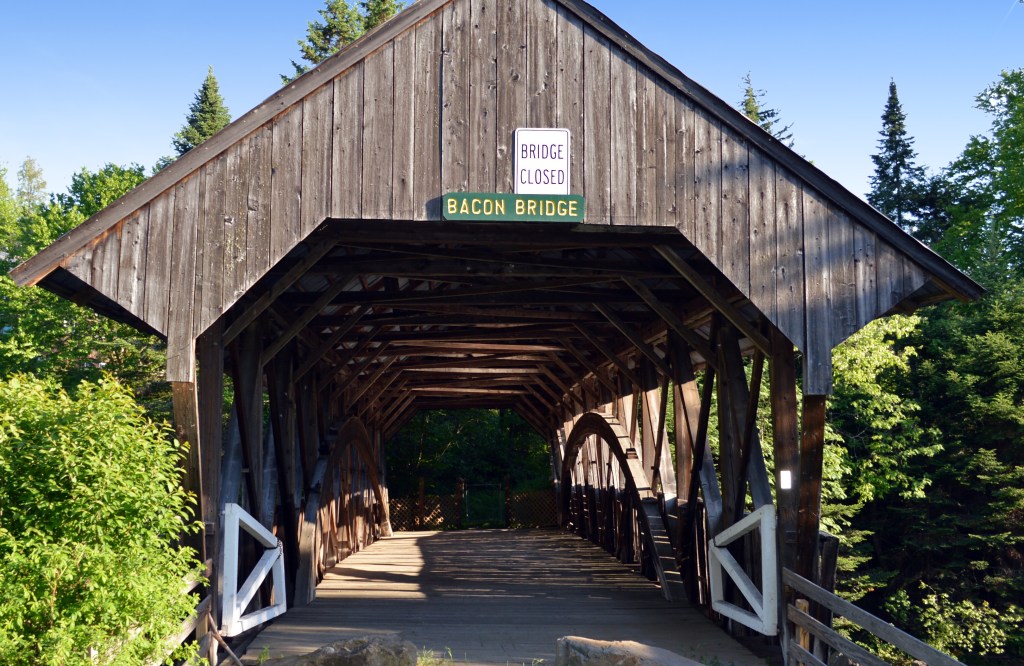
I’d been looking for something to focus on with my spare time and somehow arrived at the decision to kayak the length of the Connecticut river. This trip will be 400 miles long starting just south of the Canadian border and ending in the Long Island Sound taking many weekends over the next few years to complete. To come along on the journey I invited my urbanite brother to spend what will in all likelihood be 40 days and nights kayaking and camping. He was quick to join in as he had also been contemplating similar ideas. I’m not quite sure how or when I first decided to plan a trip like this. Perhaps it’s to reconnect with the outdoors, New England, family, or friends. Maybe it’s the need to find and explore new places. Maybe it’s simply something to occupy my time. Whatever the reason I have plenty of time to figure it out along the way. As for now, I guess it’s time to begin.
Our First Trip on the Connecticut River
Trip Overview:
Bacon Bridge to Canaan Dam
June 3, 2016 – June 5, 2016
1 day spent on water
8.5 miles paddled
This is a beautiful stretch of free stone river that follows along route 3 with the occasional diversion into farmland and woods. It does require constant attention to avoid rocks and running aground but is well worth the drive.
Friday
We spent the good part of the day driving up to the north country and we stopped at the Canaan access point just below the route 114 bridge to scope out the river. The water level wasn’t great but looked manageable. Checking online the Pittsburg’s sensor was reading 280 cfs which is low but sufficient for kayaking if you don’t mind a bumpy ride. Driving up route 3 along the river only confirmed this eventuality.
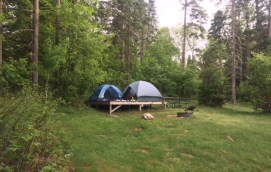
We camped out at Lake Francis State Park choosing a platform campsite along the river. We got a nice fire going with some dry raspberry bush stems and some cotton swabs that I brought along. Thanks for the tip Ryan. The campground has bathrooms, showers and a small store where you can buy firewood and snacks.
Saturday
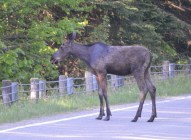
The morning started with a drive up to the Canadian border to see the Connecticut lakes and any wild life. And as it often does at 6:00 am on a cool morning the great north woods produced.
After prepping some gear it was time to head out on the river. We staged the downstream car at the Canaan Dam portage. This was a narrow strip of grassy property on Power House road that could hold a couple of cars. It’s on the Vermont side of the river just above the dam and below the truss bridge.
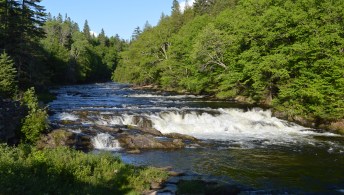
Falls above Bacon Bridge
We put in just below the falls at the Bacon Bridge on Fletcher ‘street’. The street is more of a dirt driveway that steeply falls off from route 3 and ends in about 100 feet at the bridge. There is a small parking lot off to the left at the end of the street which can hold about three cars. Next to the parking lot is a small grass lawn where you have room to prep your kayak. The put-in is adjacent to this lawn which is just upstream of the bridge and below the falls.
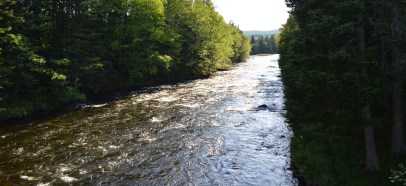
River just below the Bacon Bridge
We put in the river at 11:17 am. You’ll be dropping into some class II rapid but they’re fairly easy to navigate. The river changes back and forth between mild meandering, class I, and class II waters. This is the character of the river until you get to the Beecher Falls rapids. More on that shortly. Throughout this entire stretch of river there a rocks just below the surface that need to be maneuvered around, or over if you’re not paying attention.
An advantage of the lower water level is the opportunity to stop for a break at one of the exposed cobble beaches along the bank of the river. (Cobble Beach at Stewartstown)
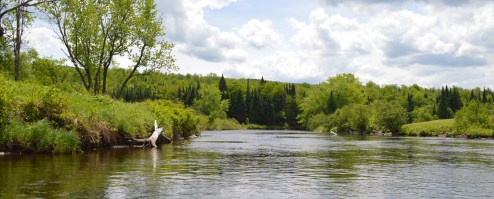
River near the confluence of Indian Stream
Chuck here: Kayaking from the bridge to the dam at this water level was great for us, we would absolutely do it again. But the bottom of our kayaks took a beating. We each got grounded a couple of times, no big deal to get out of, but the bottoms paid for it with dozens of scrapes. It was a little worse when one of our kayaks would get hung up on a single large rock in a rapid. Not too difficult to get out of, but the contours of the bottoms of the kayaks got slightly deformed. If you want your gear to stay pristine then plan to do this section earlier in the season with higher water flow, or skip it all together.
Now back to the Beecher Falls rapids. After hours of kayaking and encountering class II rapids, the Beecher Falls rapids appeared to be of a similar class when viewed from the river. (Chuck: Except perhaps for how the entire river appeared to fall several feet over a few dozen yards!) We only paused for a brief moment before I decided to make a run at it. Well let’s just say me and my 14′ lake kayak had no chance once I choose to go down the Vermont side of the rapids. Once over the first shelf I was introduced to a large rock that was kind enough to send me to a refreshing dip in the river. All my gear was tied down expect my camera which was in a pelican case (worth ever penny). I was able to trap the pelican case in the well of the kayak as we bounced down the rapids. About half way down the rapids I was able to get my kayak and gear into shallow water. I righted my kayak and inspected the damage. Fortunately the damages were limited to a bent paddle, lost sun glasses and some scrapes and bruises. These rapids are navigable for an experienced paddler but they are a class III so scouting ahead is highly recommended.
We took out at 4:36 just above the Canaan Dam.

Truss bridge just before Canaan Dam take out
Sunday
With thunderstorms rolling in and the long drive home still ahead of us, we were persuaded to cut the trip short. The cool heavy rain made for a slow drive home but excellent moose viewing.


That’s a very impressive moose! Sounds like a wonderful start!
LikeLike